Wednesday, 13 April 2016

Facebook Messenger Bots: Will This New Technology Change the Way Businesses Communicate?

Recently, Facebook launched its new messenger bots, which many business experts say will change the way companies communicate with each other.

The concept is relatively simple: Facebook believes that companies should be able to communicate with each other with the same ease as friends do. Currently, Facebook messenger has more than 900 million monthly users worldwide. These business bots, with features such as an automated customer service, contact and interactive experience, and e-commerce guidance, are an ultimate messenger upgrade. These chat bots can be likened to an all-in-one secretary that can reach millions of customers after being activated with a single click. Business forecasts suggest that Facebook could generate billions of additional revenue and keep up with other bot platform competitors through this new development. 

Image Source: forbes.com

On the other hand, there have been a few snags to the application. The chat bots are still in the infancy stage and there are still bugs to fix. Additionally, with the recent controversy over Microsoft’s "racist" bots, many companies are hesitant to transition their communications to an artificial intelligence. One study showed that many business people still consider business communications as a personal endeavor – one that would still require direct communication with a human. 

With this, most predictions for the supposed radical shift in business communications are tempered by the idea of a gradual transition. The change will come but many analysts give complete technological absorption a couple more years. 

Image Source: techcrunch.com
Marc Slavin has helped launch several effective business communications projects and is a respected communications consultant. Follow this Twitter account to learn more news about business communications.

Monday, 4 April 2016

What Makes a Successful Political Campaign?

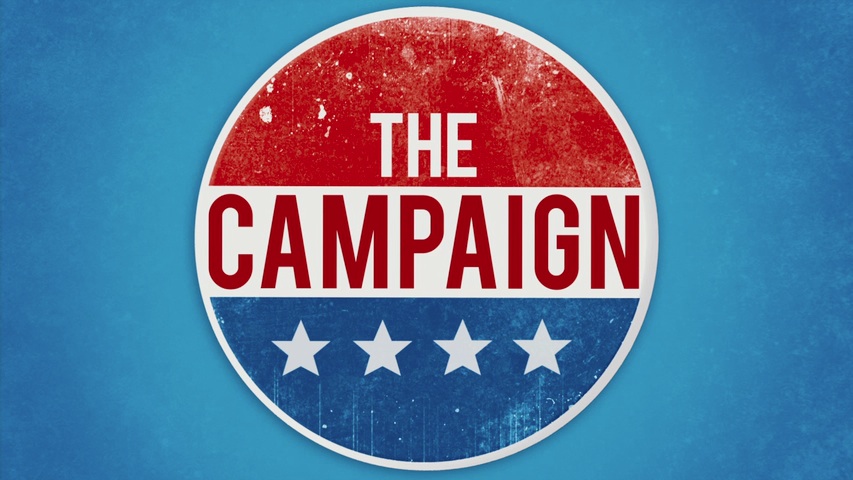
It’s election season once again. We’ve seen a lot of bloopers and laudable campaigns from political bets, but what makes these campaigns successful? With a lot of dollars on the line, PR companies have been consulting psychologists, researchers, and other professionals to find out to what the public wants from their leaders. 

http://www.the-numbers.com/video/Campaign-The/Campaign-The-poster.jpg
Image source: the-numbers.com
Appeal to voters’ emotions

What do the voters want? Health care? Wage hike? Less crime? More opportunities for women? To run a good campaign, the candidate must “know” what the voters want and appeal to it. 

Credibility and values

Why would people vote for someone who is not credible to them? Voters look at politicians in a different perspective. If these politicians hold values that are not aligned with what they want, voters consider other candidates. However, if politicians keep their values and credibility intact, they might just get the votes they need. 

Targeting possible advocates

When politicians have already “locked” on their possible advocates, the rest of the voting class will follow. They need a strong background, so they target people whose opinions are taken seriously, as their secondary “promoters”. 

http://www.bfiprinting.com/images/Campaign%20Printing%20Services.jpg
Image source: bfiprinting.com
Positive message

People look for campaigns that spread happiness, warmth, and other positive messages. These make politicians more attractive to voters.

Playing with what’s already there

Have a blooper, a meme, or a tagline that’s yours? Play and do tricks with it, and turn these negative tags to your advantage. 

Marc Slavin is a California-based communications consultant who has worked with various clients including large organizations, public offices, and private companies. Learn more about PR strategies when you follow this Twitter account.

Thursday, 3 March 2016

The Edge: How Effective Communication Equates to Good Customer Service

Effective communication is a must in any company. If an organization’s communication methods are ineffective, it’s about time they change it—if they want to save their name. For a company to thrive, they must always keep their customers in mind. If they fail to do so, they might eventually lose their customers

Maintaining a good company-customer relationship begins with clarity of communication. Having a clear idea of what the client wants and needs will give the company an understanding of which actions to take to provide a remedy to a situation.

Image source: forbes.com

Communication also serves as a reinforcement to solidify or to improve a purchase. A salesperson who keeps in touch with a customer immediately after the sale can reinforce the benefits of the service or product. Communication can also address problems the customers may have. Salespeople can also build a solid foundation for a possibly long-term relationship with a client that may lead to repeat sales.

Image source: forbes.com

A customer’s taste will change over time, and being able to communicate with them will give the company an idea of how to adapt to their needs. Maintaining regular communication with customers will prepare the company to provide quick and efficient delivery of services, and will provide helpful suggestions as well. 

Marc Slavin is a corporate communications strategist. Read more articles on how businesses can benefit from good communication by following this Twitter account.

Tuesday, 12 January 2016

Crafting Effective Real-time Responses During Crisis

When faced with a crisis, whether due to a sudden event or bad publicity, companies are behooved to respond. In the age of social media, staying mum could further damage credibility.

The key is preparedness. An organization, no matter the size, is vulnerable to crises. The following are tips for crafting effective responses during crisis:  

Be open and honest. Honesty and openness are indispensable, and are still the most important virtues in crisis management. People’s reaction to say, a disaster or an accident, is all human nature. Allison Canty, a social media and community manager, in a blog post, explains, “Give your customers the information you have. If you don't have any updates, tell them that too. Your customers will appreciate the honesty –even if they don't seem like they do.”  

Image source: www.eurocontrol.int

Act fast. Today, with social media, it takes a matter of seconds for customers to share and respond to a bad review or news about a company. Hence, it is critical to respond in a timely manner. Address issues as soon as possible.

As stated, it’s all about preparedness. Anticipate potential crises and establish methods on how to deal with them any time they could occur in an organization.

Image source: www.recognitionpr.co.uk
Marc Slavin is a California-based communications consultant, specializing in organizational development, internal communications, and public outreach. Follow this Twitter page for more about communications and crisis management.

Thursday, 24 December 2015

The Dangers of Oversharing on Social Media

People’s lives are very much exposed today online. From places visited to meals eaten to clothes worn, almost everything is broadcast on various social networking sites.

Social media has its pros and cons. While it is a function of social networking sites to connect users to their family and friends, “netizens” are also exposed to risks such as defamation, identity theft, hacking, among others

As an online safety campaign goes, “Think before you click.” Below are typical social media behaviors that can spell danger:
Image source: gosimplysocial.com


Posting birthdate, address, current location, and contact details:

As much as you want to receive greetings from loved ones on your birthday, posting your birthdate is information scammers and hackers can use to access your personal accounts. The same goes with making public your address, current residence, and contact details such as mobile number. Also, make sure that you turn off your smartphone’s geotagging function. The last thing you want is strangers lurking around your neighborhood because you have made your home address available to the entire online community.

Taking pictures of classified information

Some things are meant for your eyes only. Do not share top-secret information linked to your job or profession. Also, stay away from sharing your ID and bank account numbers, as hackers are always on the lookout for identities they can use for their schemes. If you must post, make sure to blur sensitive information that can expose you to risks.  


Image source: alternet.org


Sharing embarrassing moments, work complaints, and marital woes

Remember that wild night you had last Thursday night? Well, it turned out it’s all over social media, and your bosses now know why you were not at work the following day. What will your friends think when they see you saying nasty stuff about your spouse?

Save yourself from trouble and do not share too much of your thoughts on social media.

Be a responsible social media advocate. Think before you click, and keep yourself (and your social media accounts) safe.

Marc Slavin is a communications strategist with over two decades of experience in communications management. Find more about responsible communication when you visit this Twitter feed.

Tuesday, 22 December 2015

Can The Myers-Briggs Test Show Personality Disorders?

The Myers-Briggs personality test (MBPT) is considered one of the most popular personality assessments. Many psychologists use the MBPT as an initial gauge of their client’s character. People can fall under one of 16 potential categories, and it is thought that these personality accurately provide a picture of how a person communicates, thinks, and interacts with others.


That being said, the MBPT should not be used as an end-all be-all kind of test. There is a danger, given its simplicity and the fact that people need only five to seven minutes to complete it, that the MBPT will be used incorrectly. All tests have limitations.

Many mental health practitioners worry that the MBPT is being referenced to determine certain personality disorders. This becomes especially dangerous when a “diagnosis” puts a person’s professional or social life at stake. Companies are now using the Myers-Briggs as an employment requirement. It is not uncommon for candidates to be turned down for their MBPT score.

But is this fair?

Image Source: hcamag.com


Companies that rely heavily on work culture and cohesion will affirm the merits of the test. However, candidates must not be turned down for a potential personality disorder, particularly if the only reference is the MBPT. The Myers-Briggs test is not meant to diagnose any disorder. If stretched, perhaps it could show a predisposition, but it does not, and cannot fully state if a person will or has a troublesome personality disorder.

Marc Slavin professionally administers the Myers-Briggs test, for which he has received qualification. Like this Facebook page for more articles related to the MBPT.

Tuesday, 3 November 2015

Communications Strategies: Leveraging the power of traditional media

With the strength of social media and other digital channels, people often forget the power of traditional media within an effective communications strategy.

For those who value it, traditional media is a critical component in creating a multi-platform mix of both offline and online channels.  And while newspaper circulation and TV viewership are dropping, traditional media is still often used to drive large audiences to digital platforms such as websites or to create ‘buzz’ in social media sites.


Image source: www.amplifymm.com

In her blog, Elena Verlee, a public relations practitioner, cites the following reasons we still need traditional media:

  • It is instantly recognizable.  Traditional media has long been used as a platform for people who want to gather reliable news and information.  Until today, most people are still aware of the name of the most credible newspapers than the most popular blogs.
  • It has more status and authority.  Traditional media coverage of a company’s event, for instance, can help the organization gain more credibility than by just merely posting the event on their company website or social media account.
  • Most social media feeds are gathered on traditional media.  Bloggers, for example, often cite news channels on their blog entries as reference for their stories.
Image source: blog.selfstorage.com

Although there is no doubt that digital media is becoming more prominent, integrating your communication strategy into both new and old media can help you achieve your desired level of exposure.

Marc Slavin is a communications strategist who employs philosophical and psychological approaches  to  creating  communication  plans.  Visit this blog for more articles on effective communication.